As an Amazon Associate I earn from qualifying purchases. Learn more
Caring for an Arthritic Dog at Home: A Practical Plan
Last updated
The short answer
Caring for an arthritic dog at home means protecting the joints you cannot see hurting: grip on every floor they walk, a supportive bed away from drafts, short gentle walks instead of long ones, and keeping weight down. None of it treats the disease, so pair it with your vet's plan.
Arthritis is one of the most common reasons a dog slows down, and it is also one of the most manageable. We cannot reverse joint changes, but almost everything about an arthritic dog's day can be made easier. Here is the order we would work in.
What does arthritis look like in a dog?
Dogs rarely limp all at once. The early signs are quieter than that:
- Slow to get up after resting, then better after a few steps.
- Reluctance to jump into the car or climb the stairs they used to take two at a time.
- Sitting in a slightly different position, or lying with the sore leg out.
- Shorter walks, more stopping, more sniffing and less trotting.
- Irritability when touched near the hips, or avoiding being handled.
The AVMA's guide for owners notes that arthritis is progressive, which is exactly why the home side of the plan matters: it decides how much of the day hurts.
Where should we start at home?
With the floor. Every step on a slick surface makes a sore joint do emergency work to stay upright. Runners along the routes your dog already walks give the biggest improvement for the least money, and most families finish this in an afternoon.
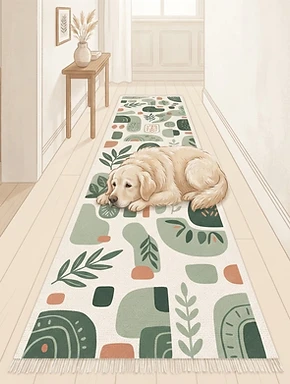
Non-slip rug runner
Why we like it: It creates a dependable grip highway across slick surfaces, giving unsure older dogs the steady footing they need to navigate hallways without hesitation.
- Hardwood floors
- Hallways
- Tile flooring
- Wobbly walkers
- All senior sizes
Then the places your dog lands: a low-entry supportive bed, a ramp instead of a jump, a mat in front of the water bowl. Our guides to slippery floors, ramps and pet stairs and choosing an orthopedic bed go through each one.
How much exercise is right?
Stiff joints do better with movement than with rest, but the shape of the walk changes. Two or three short walks of ten to fifteen minutes usually suit an arthritic dog better than one long outing, because a long walk ends with a tired dog carrying tired muscles on sore joints.
- Walk on grass or packed earth where you can, and keep pavement walks short.
- Let your dog set the pace and stop when they stop.
- Avoid stairs, steep hills and slippery boardwalks when you are choosing a route.
- Warm up with a slow few minutes before any faster movement.
Swimming and underwater treadmill work are often recommended because they take weight off the joints. Ask your vet whether a rehab facility near you is worth the trip.
How do we handle mornings and cold weather?
Most arthritic dogs are stiffest after a long rest. A bed away from drafts, a fleece coat for cold mornings and a self-warming mat under the bedding all reduce that stiffness without doing anything complicated.
| Product | Best for | Why we like it | Link |
|---|---|---|---|
| Heated dog bed with low-voltage pad | Cold weather, Orthopedic support, Stiff joints, Large dogs, Indoor or sheltered use | This orthopedic heated pad delivers gentle, thermostatically controlled warmth to help comfort stiff joints and keep older pups cozy during chilly spells. | Check price on Amazon Add to Cart |
| Warming self-heated pet mat | Staying warm, Small to medium dogs, Crate sleeping, Chilly draft protection | It offers gentle, natural warmth by capturing and reflecting your dog's own body heat without cords, plugs, or electricity. | Check price on Amazon Add to Cart |
| Pressure-relieving gel insert for dog beds | Bed topper, Bony joints, Pressure relief, Warm sleepers, Medium to large dogs | This flexible gel insert slips neatly inside an existing dog bed to cushion bony elbows and stiff hips without making the bed too tall or unsteady to step into. | Check price on Amazon Add to Cart |
Give your dog a few minutes to stand and stretch before the first walk, and let them choose when to get up. Rushing a stiff dog out the door in the cold is how you turn a good morning into a bad one.
Does weight really matter that much?
Yes, more than most owners expect. A dog carrying a few extra pounds puts that load through every step on already sore joints, and vets often describe weight as the single most effective thing an owner can change. Your vet can give you a target weight and a realistic pace. A measuring cup instead of a scoop, and fewer shared snacks, is usually where it starts.
What should we hand to the vet?
Bring notes rather than adjectives. How long it takes your dog to rise, how far they walk before stopping, which leg they favour, whether they are still jumping into the car, and whether they are eating and sleeping normally. Arthritis pain is managed with a combination of approaches your vet chooses, and a clear diary helps them get there faster.
Call sooner if you see sudden lameness, a leg your dog will not put down, or swelling. Those are not the slow pattern of arthritis. If you want a starting point for the home setup, our senior dog quiz builds a short list for your dog's size and floors.
Frequently asked questions
How do I know if my dog has arthritis?
The early signs are usually slowness after rest, reluctance to jump or use stairs, shorter walks and a changed sitting position. Only your vet can diagnose it, and they may want to see your dog walk and check the joints. A short video of your dog getting up is genuinely useful at that appointment.
Should an arthritic dog rest more?
Rest helps during a flare up, but too much rest stiffens joints further. Most arthritic dogs do best with short, gentle walks several times a day, plus comfortable resting spots between them. Your vet can tell you what is right for your dog's stage.
Are heated beds safe for older dogs?
Low-voltage heated beds are used by many owners, but check the cord and cover weekly and give your dog the option to move off. A dog with reduced sensation can get too warm without noticing. Self-warming mats, which reflect body heat, are the simpler option.
What flooring is best for an arthritic dog?
Carpet or non-slip runners over hard floors. The point is not the material itself but that paws can press into it without sliding. Runners along the paths your dog uses daily are more useful than one large rug in the middle of a room.
Sources
- Arthritis in Dogs · American Veterinary Medical Association
- Dealing With Canine Arthritis · American Kennel Club
- Osteoarthritis · Cornell University College of Veterinary Medicine
Get gentle, practical tips for your senior dog
One thoughtful email now and then. No spam, unsubscribe anytime.
Related guides


Product guide
Why a Non Slip Runner Rug for Senior Dogs Is a Must-Have
A non slip runner rug for senior dogs provides the traction needed for shaky legs, turning slippery hallways into safe pathways for your best friend.
Read the guide

Product guide
Why an Orthopedic Memory Foam Bed for Senior Dogs Makes a Difference
Give your aging companion the support they deserve. We explore why an orthopedic memory foam bed for senior dogs is a game changer for comfort and mobility.
Read the guide

Product guide
Why an Orthopedic Cave Bed for Senior Dogs Is a Game Changer
Looking for the perfect sanctuary for your aging pup? See why an orthopedic cave bed for senior dogs offers the warmth and comfort they crave.
Read the guideNot sure where to start?
Answer 5 quick questions and get a starter setup matched to your dog, your floors and your home.